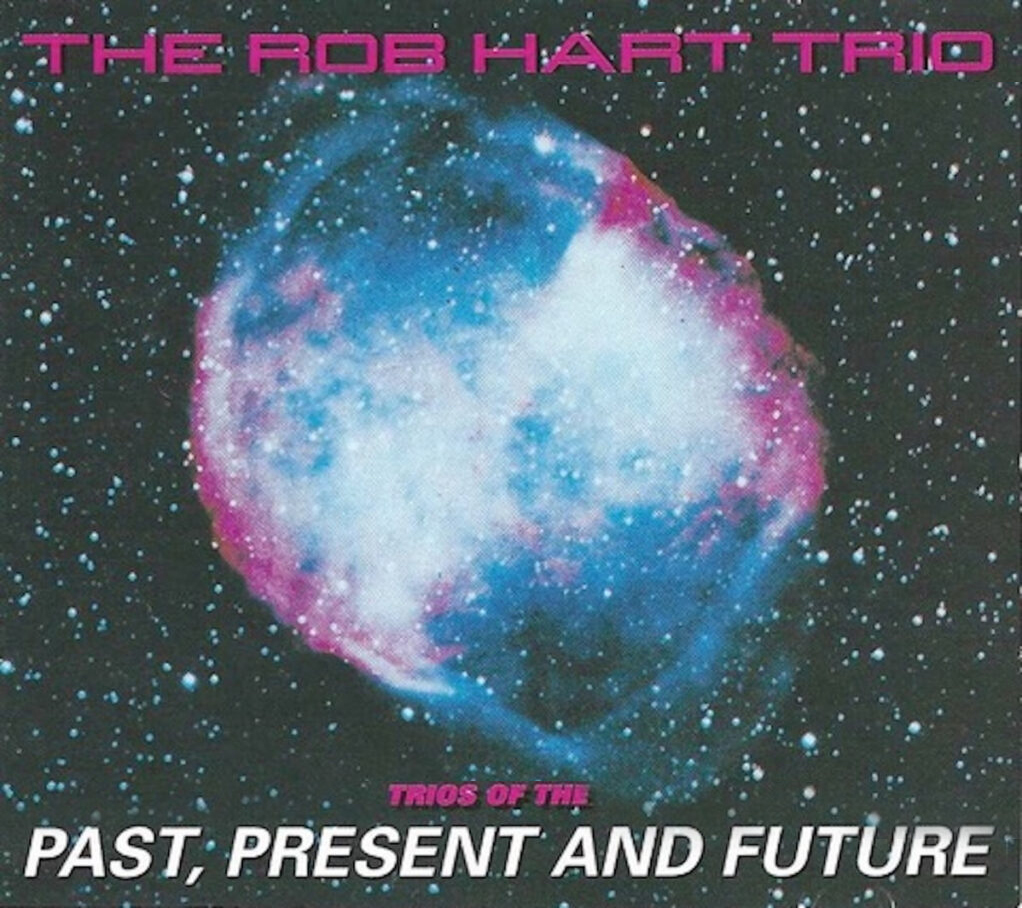
TRACKS
- Inner Urge (Joe Henderson)
- For Pat (Jeff Massanari)
- Banana Slug Trail (Rob Hart)
- Purity (John Seppala)
- Time Remembered (Bill Evans)
- The Girl From Ipanema (Antonio Carlos Jobim)
- Tony to the Maxx (Rob Hart) (dedicated to Tony Williams)
- Ten Directions (Rob Hart)
- Guanaha (Dave Bell)
- A Bit of the Bean (Rob Hart, Dave Bell)
Produced by Rob Hart
CREDITS
Rob Hart: Drums, Woodblocks, Pots & pans, Chair (3), Tambourine, Agogo bell, Triangle (6), Drum loop sample (10)
John Seppala: Piano (1, 4, 8), Access Virus synth (1, 4), Kurzweil PC88-MX synth (4), Korg M1R Clavinet (10)
Dave Bell: Electric guitar (1, 3, 9, 10), Acoustic guitar (6)
Eric Wilson: Electric bass (1, 3, 6, 10)
Jeff Massanari: Electric guitar (2)
John Wiitala: Acoustic bass (2, 9)
Kai Eckhardt: Electric bass (4), 6-string fretless bass (8)
David MacNab: Electric guitar (5), Electric guitar solo (6)
Marc Van Wageningen: Fretless bass (5)
Brian Pardo: Electric guitar (melody, solo 10)
Recorded by Dave Bell at Bell Boy Recording, Richmond, CA, August 1998–February 1999
Mixed by Rob Iriartborde at Music Annex, Menlo Park, CA
Additional mixing by Dave Bell at Bell Boy Recording
Mastering by Tardon Feathered at Mr. toads, San Francisco, CA
With Trios of the Past, Present and Future, the Rob Hart Trio delivers a thoughtful and engaging exploration of the jazz piano trio tradition while firmly establishing its own contemporary voice. The album functions as both a tribute to the lineage of classic jazz ensembles and a forward-looking statement about where small-group jazz continues to evolve.
From the opening track, the trio demonstrates an impressive command of dynamics, interplay, and musical storytelling. Rob Hart’s piano work balances sophistication with emotional clarity, drawing influence from the great architects of jazz piano while avoiding imitation. His phrasing is fluid and expressive, capable of shifting from delicate lyricism to driving rhythmic intensity within a single performance.
The rhythm section deserves equal recognition for the album’s cohesion and depth. The bass and drums provide far more than accompaniment; they act as fully conversational partners throughout the recording. Their responsiveness and subtle communication create an atmosphere where improvisation feels organic and alive. At moments, the trio recalls the conversational elegance of classic jazz groups, while elsewhere it ventures into more modern harmonic and rhythmic territory.
The “past” referenced in the album’s title emerges through the trio’s respect for jazz tradition — evident in swing-infused passages, melodic sensitivity, and carefully crafted arrangements. The “present” is reflected in the ensemble’s contemporary harmonic language and polished production, while the “future” appears in the trio’s willingness to stretch form, texture, and rhythmic structure without losing accessibility.
What makes Trios of the Past, Present and Future particularly compelling is its balance. The album never feels overly academic or nostalgic. Instead, it captures the spirit of jazz as a living art form — rooted in history yet constantly reinventing itself. Each composition contributes to a larger narrative, creating a listening experience that rewards both casual audiences and dedicated jazz enthusiasts.
Ultimately, the Rob Hart Trio succeeds in crafting an album that honors the enduring legacy of the jazz trio while confidently contributing something new to the conversation. Trios of the Past, Present and Future is a refined, intelligent, and deeply musical recording that highlights the enduring vitality of modern jazz.